

Three PNC Plaza
Project Details
Product List:
Project Type:


Get Full Story:
Other Project Details:
- Solarban® 70 Glass (Formerly Solarban® 70XL Glass) (3) Caribia® Glass
- Solarban® 60 Glass (2) Clear
- Starphire® Glass
Location:
510 Market Street, Pittsburgh, Pennsylvania, 15222
Project Credits

Architect:
Design Architect: Gensler
Local Architect of Record: Astorino

Glass Fabricator:
Trulite Glass and Aluminum Solutions

Glazing Contractor:
Oldcastle BuildingEnvelope

Owner/Developer:
The PNC Financial Services Group, Inc.

General Contractor:
P.J. Dick

Photography:
Jim Schafer

LEED® Certification:
LEED® Gold
Project Background
Pittsburgh was once one of America’s great industrial centers, a place where noisy, smoke-filled factories made the country’s building blocks from metal, brick and glass. Now in its rebirth as a high-tech hub of medicine and finance, it’s no surprise that PNC Financial Services Group, a hometown leader of that renaissance – and a trailblazer in green building, to boot – is using a glass and steel skyscraper to pay homage to the city’s rich manufacturing heritage.
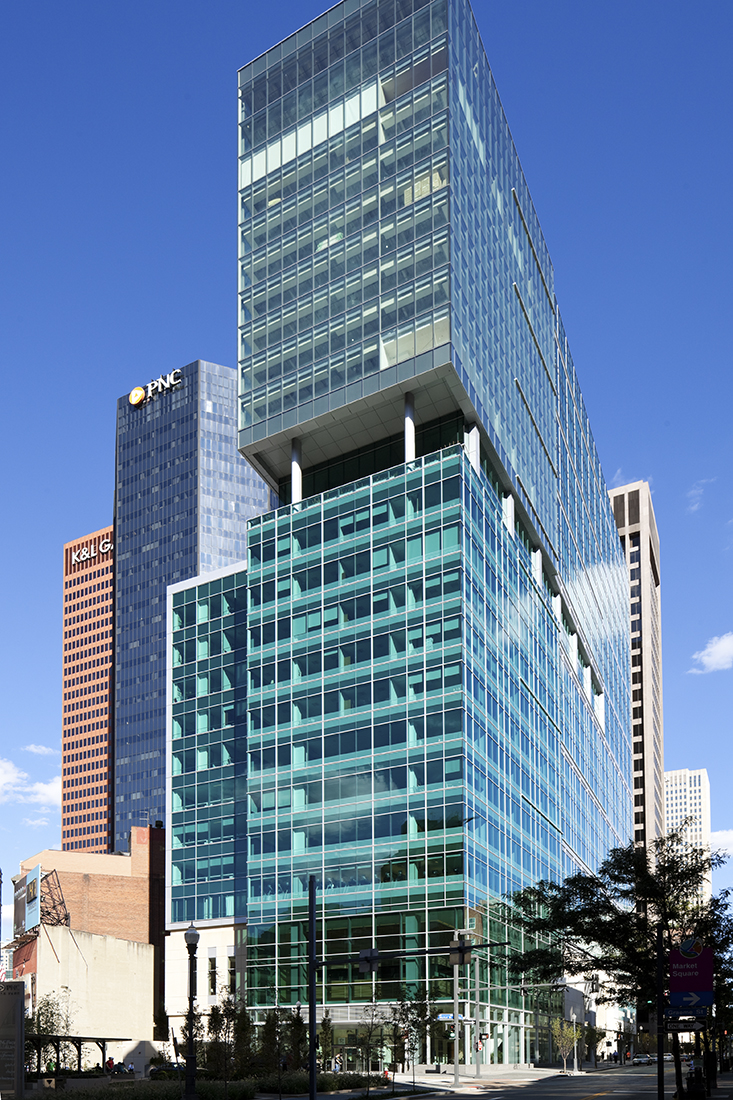
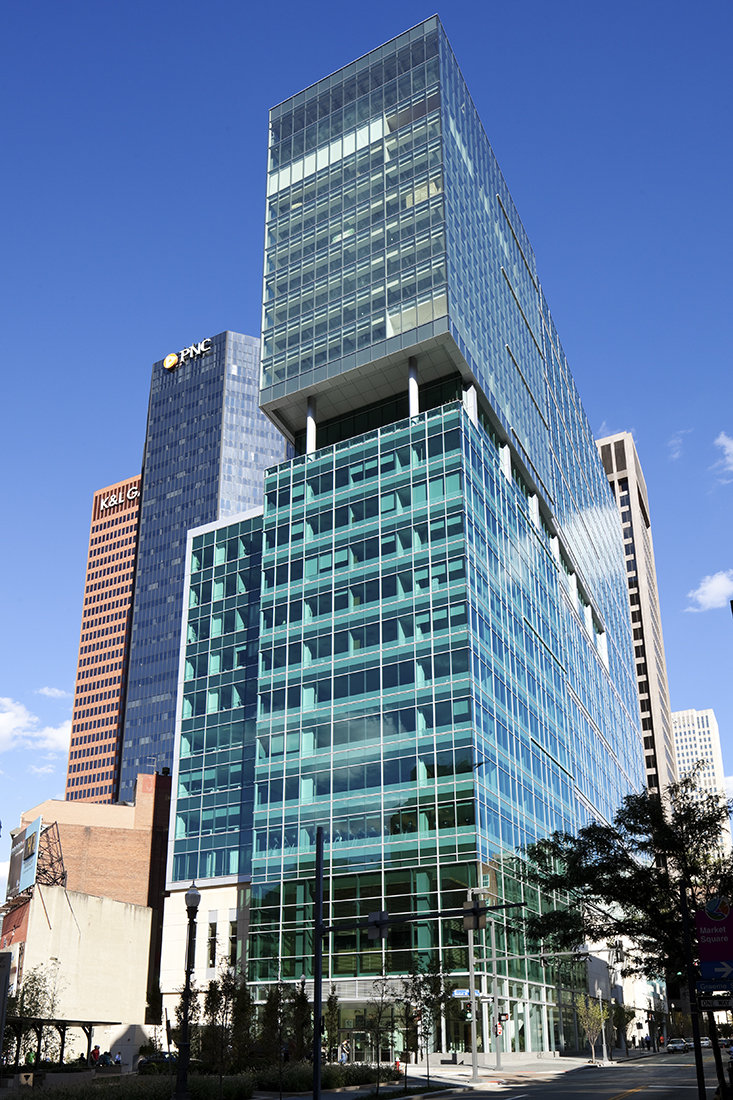
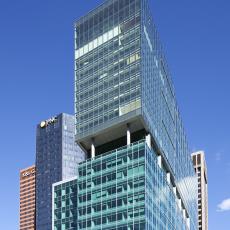
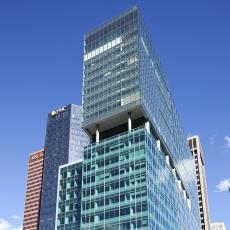
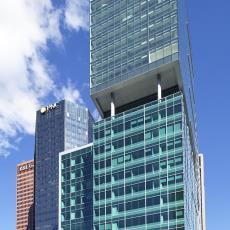
Situated on a dense urban crossroads in the city’s downtown, Three PNC Plaza makes the most of its crowded environs by serving multiple purposes – as Class A office space, upscale condominiums and the Fairmont Pittsburgh luxury hotel.
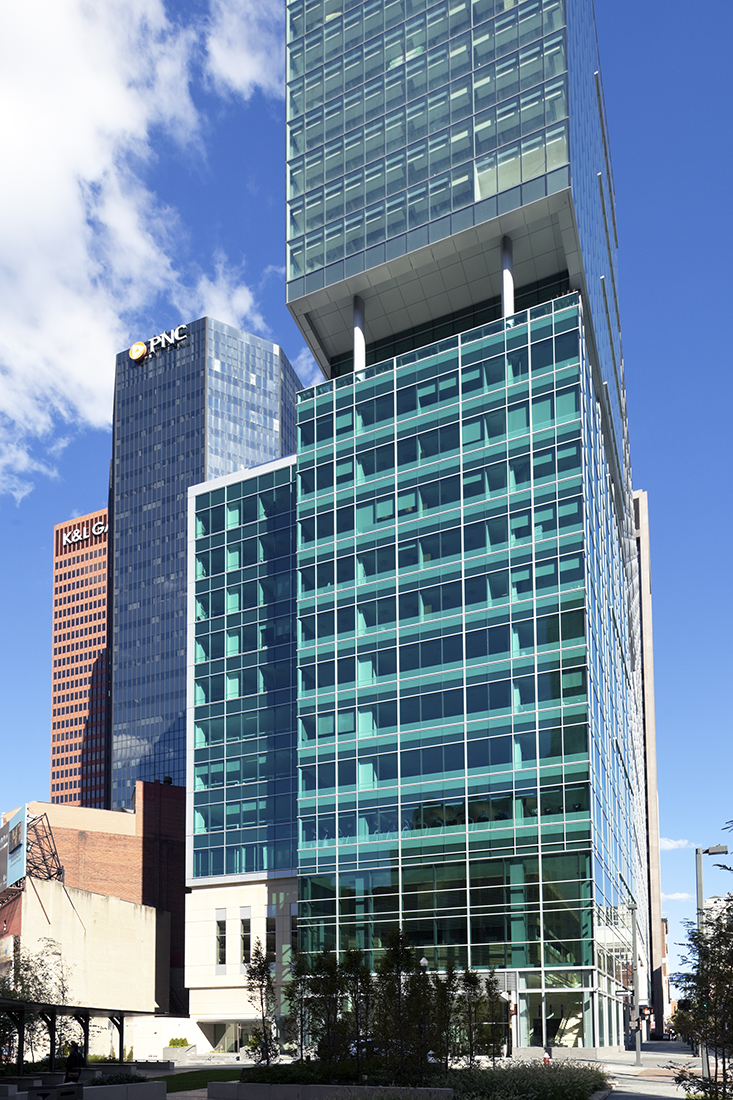
San Francisco-based Gensler used three different kinds of glass by Vitro Architectural Glass (formerly PPG Glass), a close neighbor of PNC and itself a thriving pioneer from Pittsburgh’s industrial past, to clearly demarcate the three portions of the building. Solarban® 70 (formerly Solarban® 70XL)/ Caribia® glass, which casts a soft green tint, was specified for the office and hotel, while two types of clear glass – Solarban® 60/clear glass and Solarban® 60/Starphire Ultra-Clear® glass – were selected for the condominiums, lobby and retail space.
Benjamin Tranel, a project architect with Gensler, explained the thinking behind the firm’s creative approach. “The [various] glass types create a differentiation as you read the building from the exterior,” he told USGlass magazine. “Between the office and hotel, we used ceramic frit on the office, but not on the hotel, and we differentiated the mass by using the ceramic frit in some areas, but not in others. In the storefront portion, it’s all very clear and open to activate the street from the pedestrian level when you’re walking by.”
Three PNC Plaza, which began construction in 2008, was also one of the first monumental structures to feature broad expanses of Solarban® 70 glass on a building façade. Introduced in 2005, the transparent glass was the first to employ Vitro’s proprietary triple-silver coating, a technology that enables it to bathe building interiors in high levels of natural daylight while mitigating the effects of solar heat gain, two attributes in high demand for architects of sustainably designed buildings.
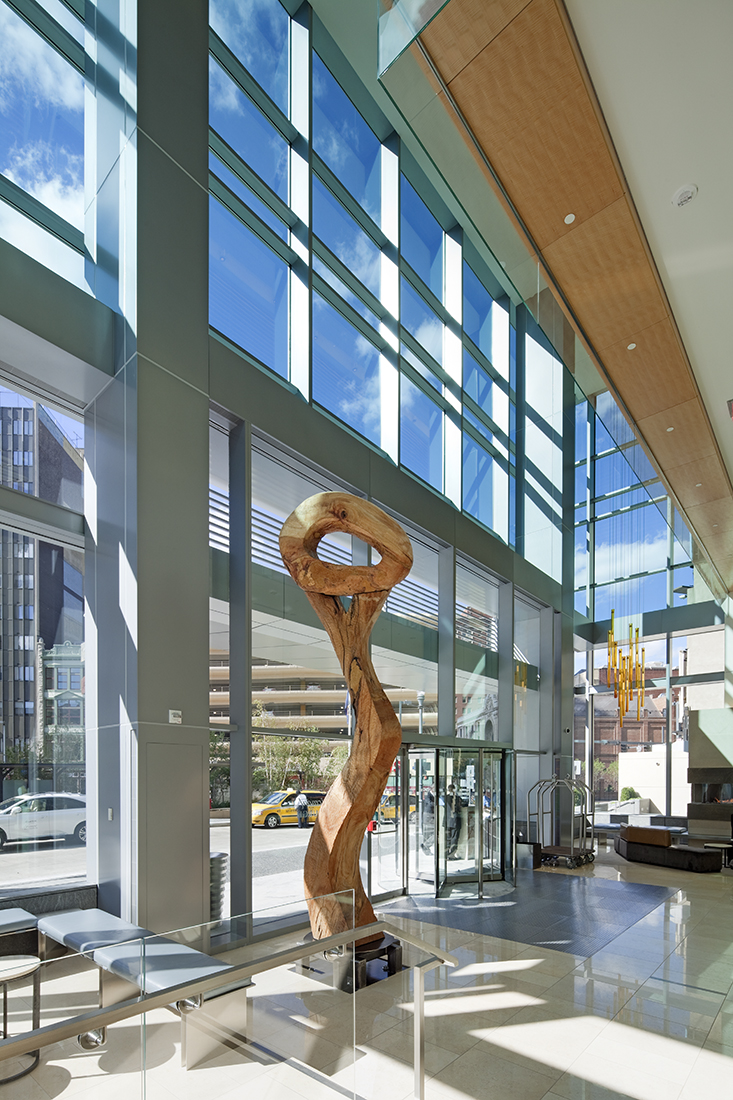
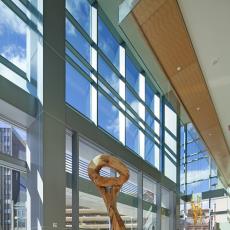
“[Vitro] provided us with a new coating that had not been used extensively before,” Tranel said. “[That product], together with the coating on the number-three surface and the frit on the number-two surface, gave us the energy efficiency we needed because Three PNC Plaza is LEED®-certified at the Gold level. The use of Solarban® 60/clear and Solarban® 60/Starphire Ultra-Clear® glasses provides the interior lobby with high levels of natural daylight while mitigating the effects of solar heat gain. With the construction of Three PNC Plaza, PNC continues to maintain a commitment to green building that is virtually unmatched. the building [was] also targeting LEED® certification. Part of that achievement is energy performance, so the glass was carefully selected based on environmental performance and its aesthetic.”
Thanks in part to the installation of environmentally advanced Vitro Glass products, Three PNC Plaza was LEED® Gold certified in 2010. More than 90 percent of the floor space has access to daylight and 95 percent has exterior views.
Other significant environmental features include high-efficiency plumbing fixtures, extensive use of low-emitting paints, and CFC refrigerants, adhesives and wood composites. Nearly 70 percent of the project’s demolition and construction waste was diverted from landfills, and culturally significant artifacts mined from the site are on display in the building.
By the time the 23-story tower debuted in 2009, the firm had opened 112 newly constructed LEED buildings – mostly bank branches – more than any company in the world.
Vitro serves as an environmental leader in its own right. In 2008, Vitro became the first company to have its entire collection of architectural glasses Cradle to Cradle Certified®. Vitro also manufactures a full roster of sustainable glass, coatings and paints.