

Rolex Tower

Project Details
Product List:
Project Type:


Get Full Story:
Other Project Details:
- Solarban® R67 Glass (Formerly Solarban® 67 Glass) Optigray® Glass
Location:
2610 N. Harwood St. , Dallas, Texas, 75201
Project Credits

Architect:
Kengo Kuma and Associates; HDF Architects

Glass Fabricator:
Tristar Glass Inc.

Owner/Developer:
Harwood International

General Contractor:
HDF

Photography:
Tom Kessler
Project Background
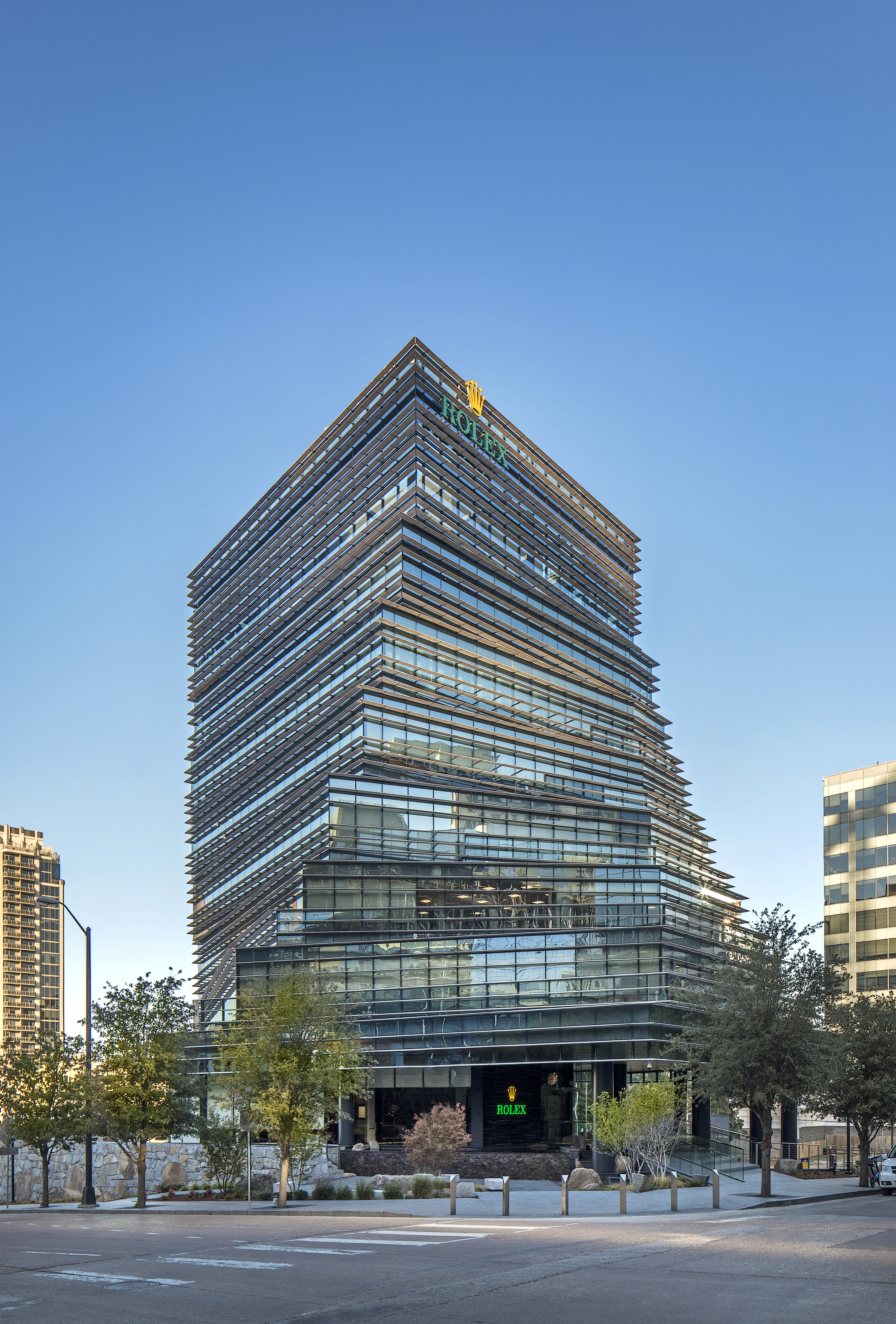
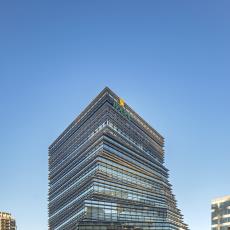
Rolex watches are known for their design and precision, so it is only fitting that the new office tower the company commissioned in downtown Dallas, designed by renowned Japanese architect Kengo Kuma, reflects those same values.
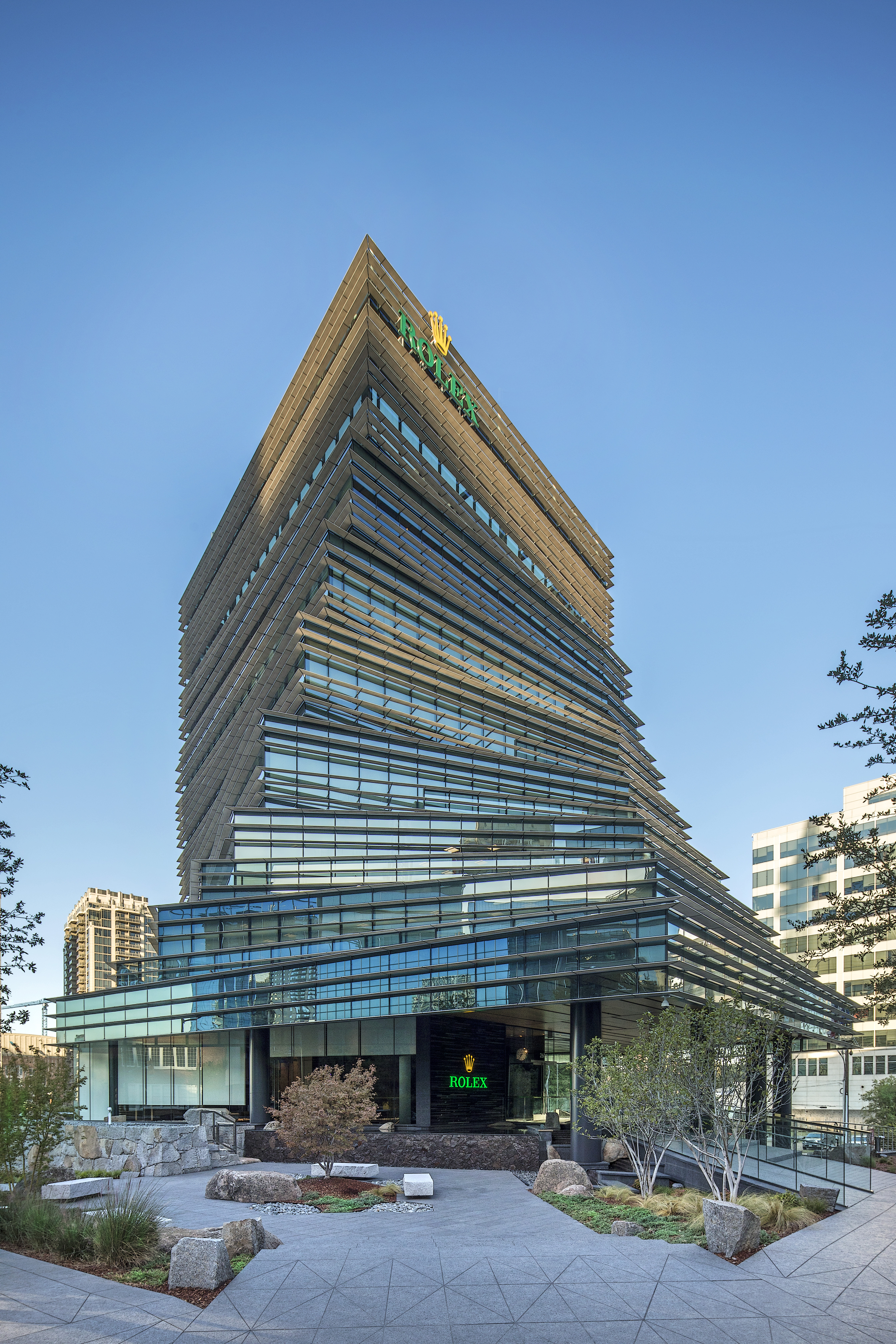
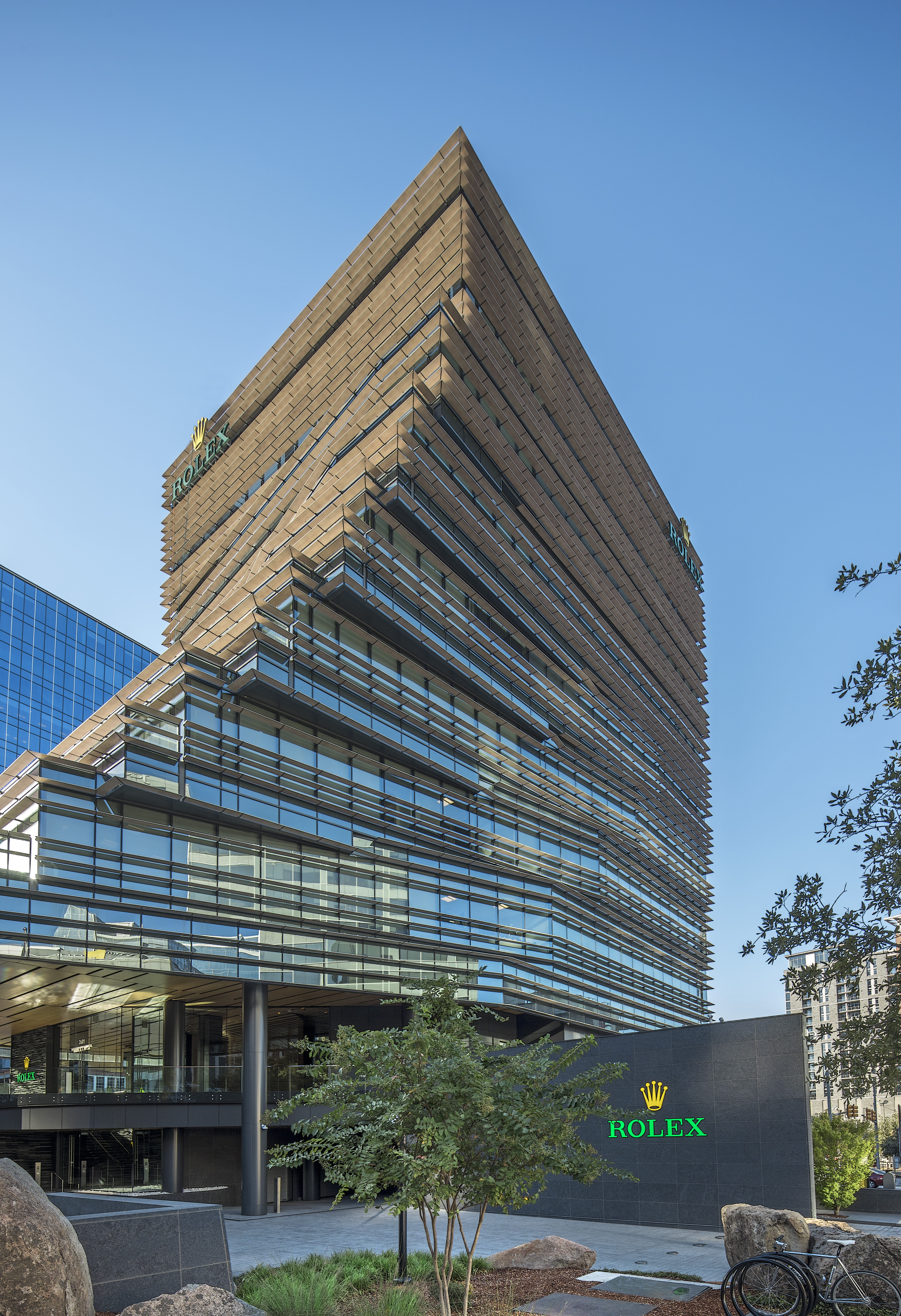
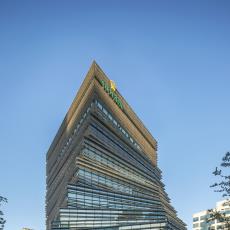
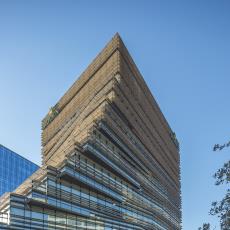
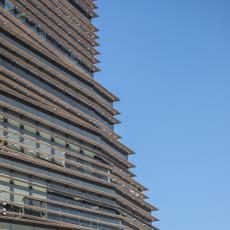
Rising from a multi-tiered garden of reflective pools, native plantings and a hand-chiseled quarry stone wall, the eight-story structure is abruptly staggered at each floor plate to maximize daylighting and city views, and to accommodate the expanded outdoor terraces and garden sanctuaries the architect designed for each level of the building.
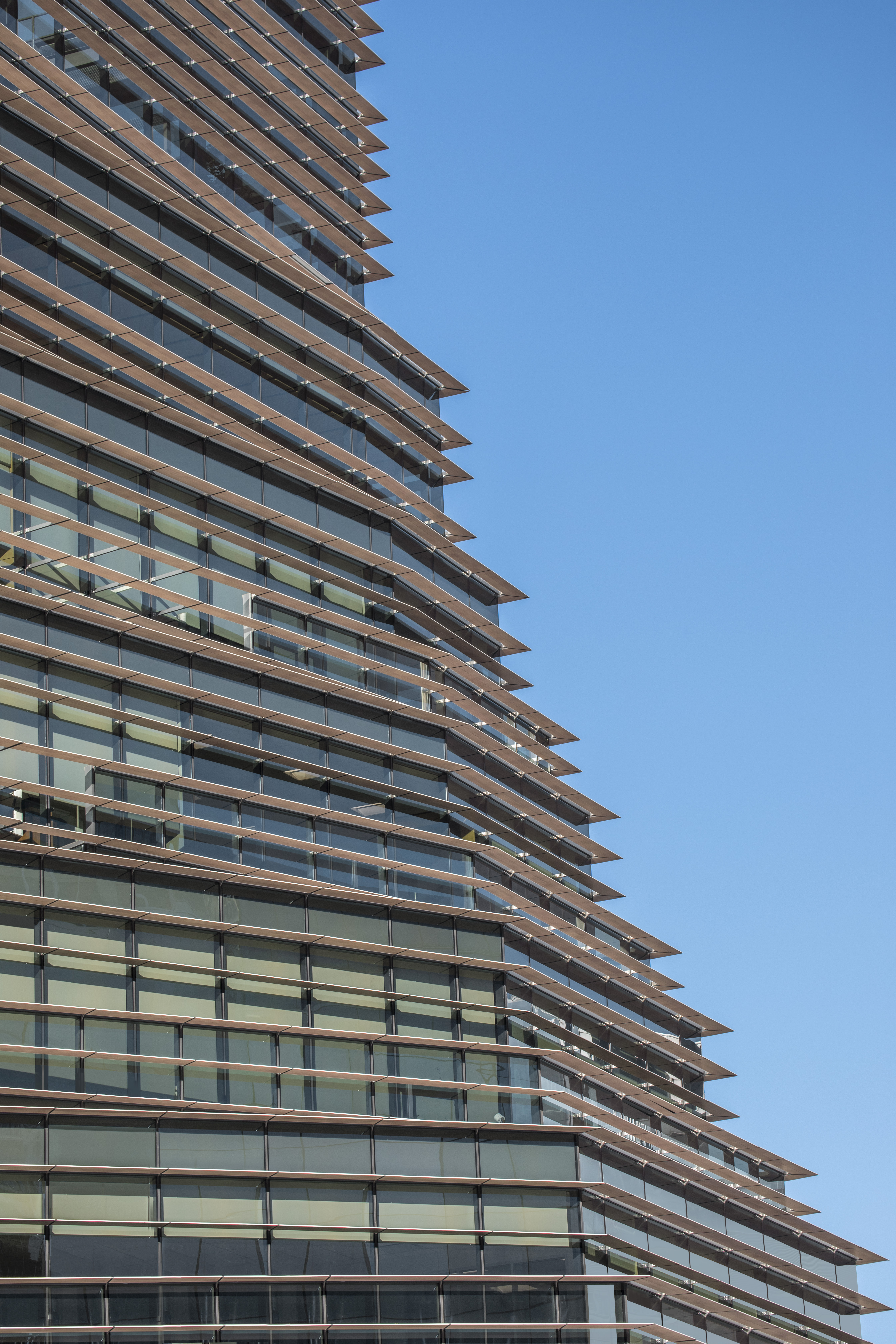
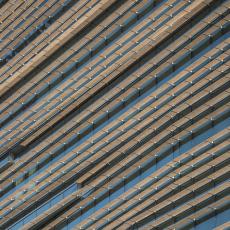
While the tower achieves its rotated shape primarily with concrete and stone, Solarban® R67 (formerly Solarban® 67) Optigray® glass by Vitro Architectural Glass is integral to its fusion of nature and architecture. Gregory A. Oehlers, executive director of architectural sales for Tristar Glass, a member of the Vitro Certified® Network, said the glass was selected jointly by Kuma and his collaborators at HDF for its ability to enhance views while harmonizing with the tower’s landscaping and foliage.
“Solarban® R67 Optigray® glass possesses a very soft blue-gray exterior color, which is very pleasing to the eye,” Oehlers explained. “It also has low exterior reflectivity and it is extremely energy-efficient,” which suited the architect’s penchant for sustainable design.
Identifying the right glass for Rolex Tower was a complex process. “A plethora of products were reviewed early on,” Oehlers added. “Once the list had been narrowed to a select few, a full-sized mock-up was used for the final selection process. Southern Glass and Mirror (SGM) constructed the mock-up simulating a variety of site conditions, which helped ensure the final glass choice was the right one.”
The unique twisting shape of the building presented a range of challenges. While every floor of Rolex Tower was designed as a trapezoid, each assumed a slightly different shape. As a result, no two corners of the building are the same, which made it difficult for SGM to frame up the cast-in-place concrete and to design and install the glass curtain wall.
To help manage the complex logistics associated with the project, Tristar joined forces with the Vitro Concierge Program®, a service created to deliver success at every step in the glass supply chain for challenging projects such as Rolex Towers.
“Vitro was very much involved in the planning process,” Oehlers said. “Glass was reserved through the Concierge Program to ensure availability at specific times throughout the project. The coated glass was sourced from Vitro’s plant in Wichita Falls, then fabricated at our location in Grand Prairie so we could service project needs on a local basis.”
As the curtain wall designer and installer, SGM was vital to managing logistics as well. To facilitate timely glass delivery, the company collaborated with Tristar and the Concierge Program manager to resolve engineering challenges well in advance of order entry; then placed its glass orders with Tristar in the sequence required to ensure its products arrived on the job site just as they were ready to be installed.
In the end, Oehlers said the project, which consumed more than 50,000 square-feet of glass, was executed with the exactitude of a Rolex watch. “As a result of all the pre planning, there were no hiccups and not a single delivery was delayed,” he reported.
Introduced in 2016, Solarban® R67 glass is formulated with a soft, almost undetectable neutral coating that endows commercial buildings with a clean, clear appearance and excellent solar control. When coated on an Optigray® glass substrate in a standard one inch insulating glass unit (IGU), it delivers visible light transmittance (VLT) of 38% and a solar heat gain coefficient (SHGC) of 0.24.