

Georgia Gwinnett College Library
Project Details
Product List:
Project Type:


Get Full Story:
Other Project Details:
- Solarban® 70 Glass (Formerly Solarban® 70XL Glass)
- Clear Glass
Location:
1000 University Center Lane, Lawrenceville, Georgia, 30043
Project Credits

Architect:
Leo A Daly

Glass Fabricator:
Oldcastle BuildingEnvelope®

Glazing Contractor:
Glass Systems

Owner/Developer:
The University System of Georgia/Board of Regents

General Contractor:
Construction Manager at Risk: The Potts Company

Photography:
AJS Studios Inc./ Alan J Stephens
Project Background
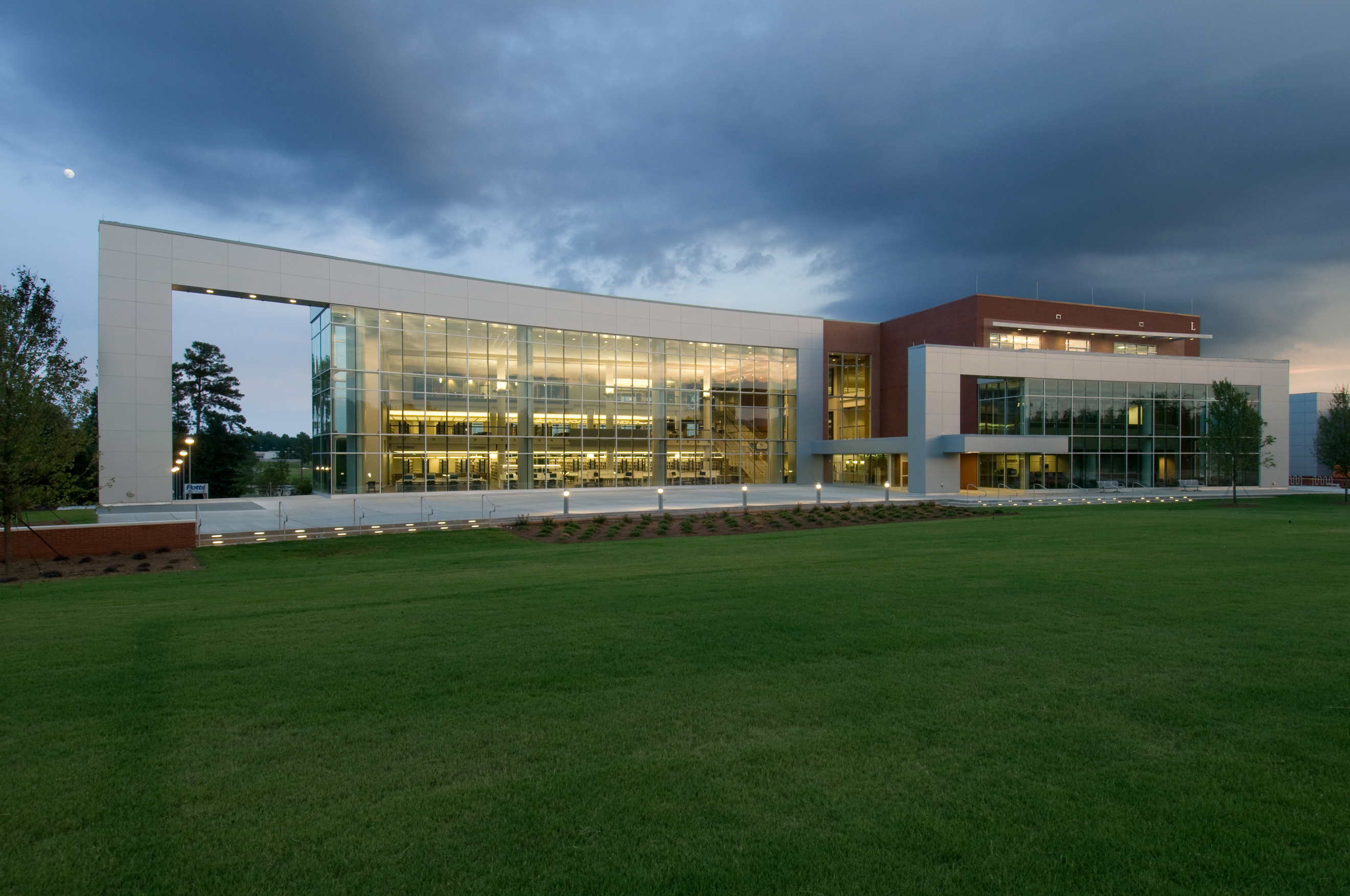
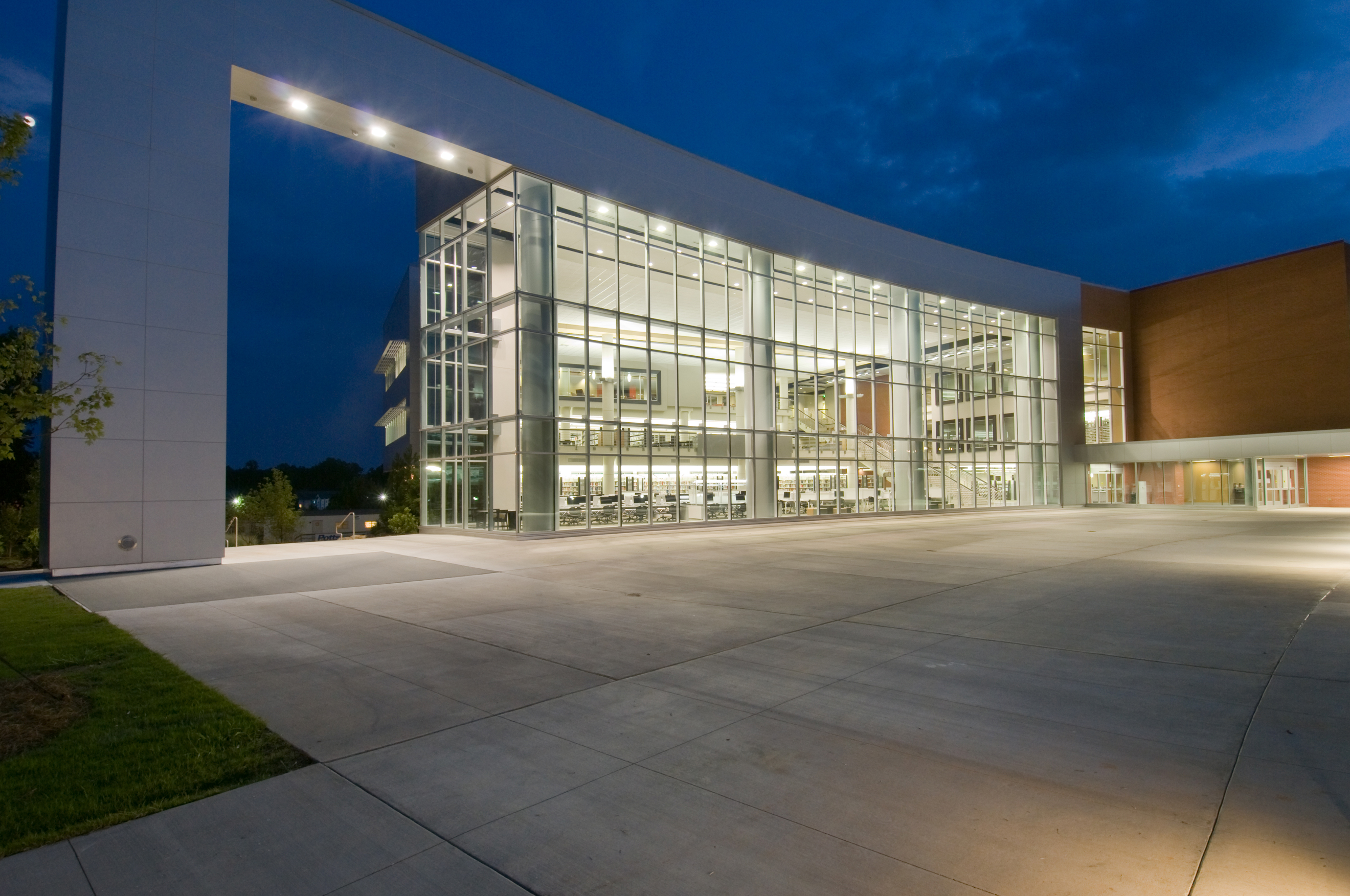
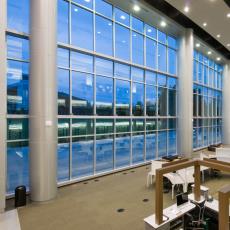
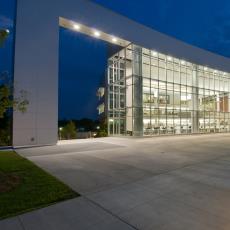
Built as a “Knowledge Center,” the 90,000-square-foot Georgia Gwinnett College (GGC) Library, Lawrenceville, Ga., was designed to be the intellectual and social heart of a new college campus opened in 2006—the first new four-year public college created in the nation in the 21st century. Architectural firm LEO A DALY chose to express that commitment to knowledge and openness with a brilliantly transparent façade, fabricated from Solarban® 70 (formerly Solarban® 70XL) Starphire® glass by Vitro Architectural Glass (formerly PPG glass), which also contributes to the building’s exceptional energy and environmental performance.
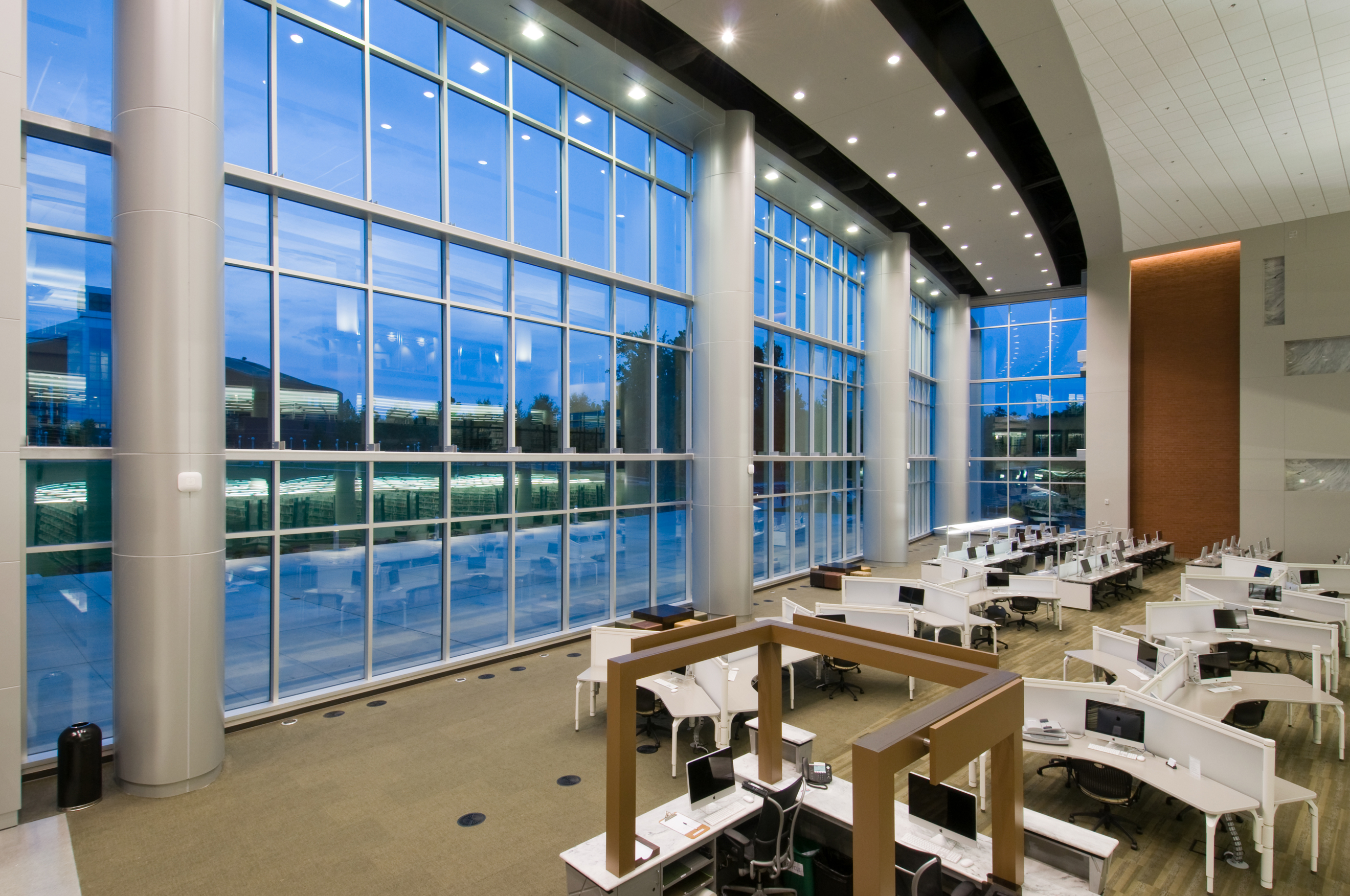
Jerry Voith, LEO A DALY principal-in-charge of the project, said the dual desire to promote openness and to earn LEED® certification for the library helped inspire a design that maximizes daylight penetration into the building, while taking full advantage of the outside scenery.
In fact, the library’s signature design element is a large atrium that provides 90 percent open views to and from the central campus green and walks, and saturates 75 percent of the interior space with natural daylight.
Voith said LEO A DALY selected Solarban® 70 Starphire® glass for the atrium and the rest of the building envelope because it provided the optimum balance of transparency and thermal performance. With visible light transmittance (VLT) of 64 percent and solar heat gain coefficient (SHGC) of 0.27, Solarban® 70 Starphire® glass achieves a light to solar gain (LSG) ratio of 2.37, which remains among the highest in the industry more than five years after the product’s introduction.
In addition to extensive use of glass, the library’s integrated sustainable design strategy encompassed the orientation of the building, layout of the windows and shading devices, mechanical and lighting systems that reduce energy consumption, and an under-floor air distribution system. According to Cecilia Cunningham, LEO A DALY’S LEED coordinator, these individual components combined to help produce a 32 percent drop in the library’s energy consumption compared to the code baseline.
The GGC library also is notable because it is believed to be the first academic library to earn a LEED Innovation in Design credit at least in part for its use of Cradle to Cradle Certified® (C2C) products. The architects specified Solarban® 70 Starphire® glass, a C2C-certified glass, as part of a curtainwall system by Kawneer that also is C2C-certified. That enabled their combined cost to exceed the minimum building materials cost threshold needed to earn the LEED Innovation in Design credit.
C2C certification, which is awarded by MBDC (McDonough Braungart Design Chemistry), independently evaluates the total impact of environmentally focused products on human health and the environment throughout their life cycle. Vitro Architectural Glass is the first and only glass manufacturer to earn C2C certification for its entire collection of architectural glasses.
The intent of the Innovation in Design credit is to give design teams and projects the opportunity to be awarded points for exceptional performance above the requirements set by the LEED Green Building Rating System, or to implement innovative products or design strategies in green building categories that are not specifically addressed by LEED.
With a capacity for 300,000 volumes, the GGC Library contains 37 study rooms and houses the Academic Enhancement Center, Quiet Reading Room, Heritage Lecture Room and the Center for Teaching Excellence, in addition to a café on the main floor. It earned LEED Gold in 2010.