

Buchanan High School Energy and Environmental Research Center
Project Details


Other Project Details:
- Solarban® 70 Glass (Formerly Solarban® 70XL Glass)
Location:
Clovis, California, United States
Project Credits

Architect:
S.I.M Architects

Glass Fabricator:
Vitro Certified® Fabricator

Glazing Contractor:
San Joaquin Glass Co., Inc.

Owner/Developer:
Clovis Unified School District

Photography:
Paul Mullins, Mullins Studio
Project Background
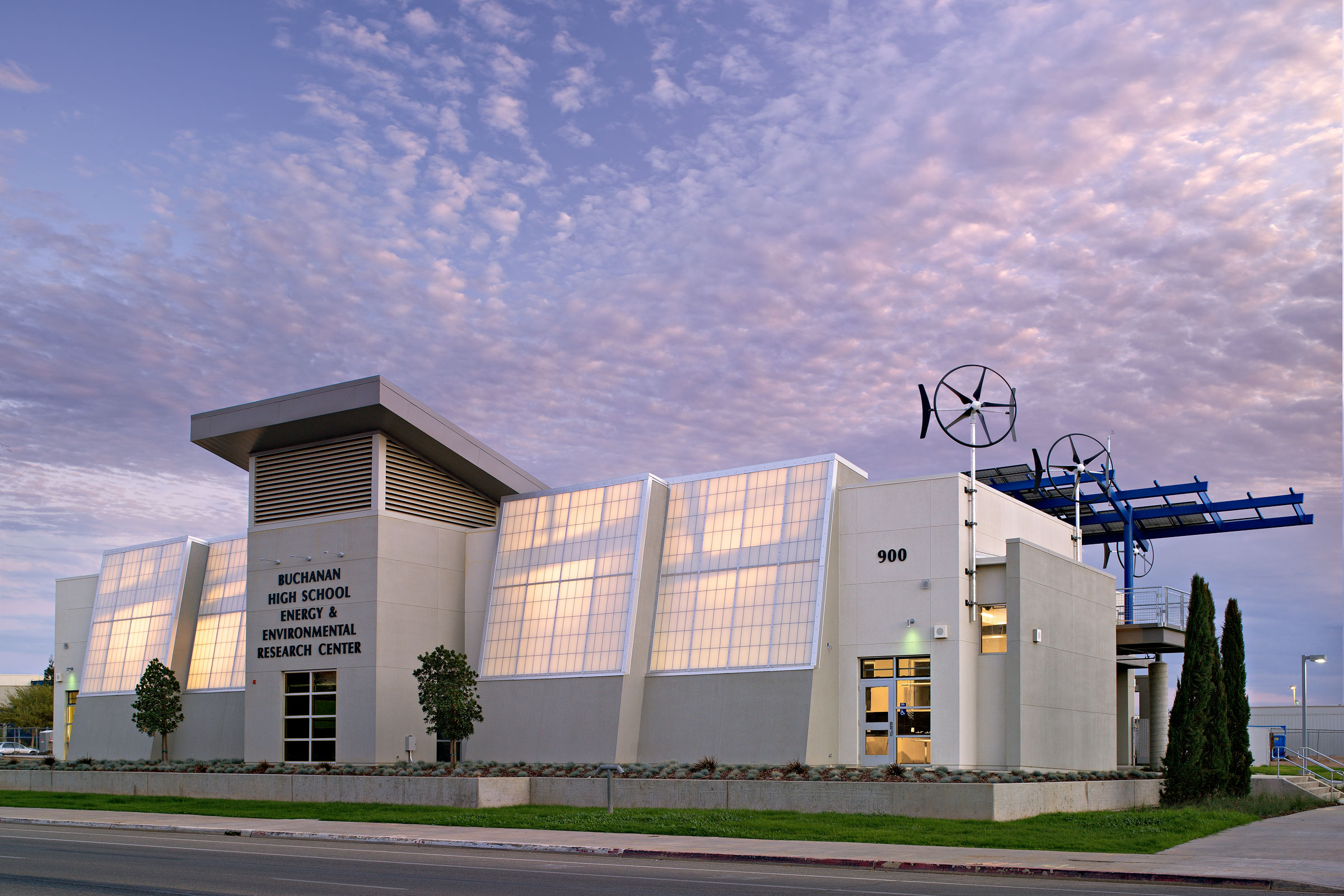
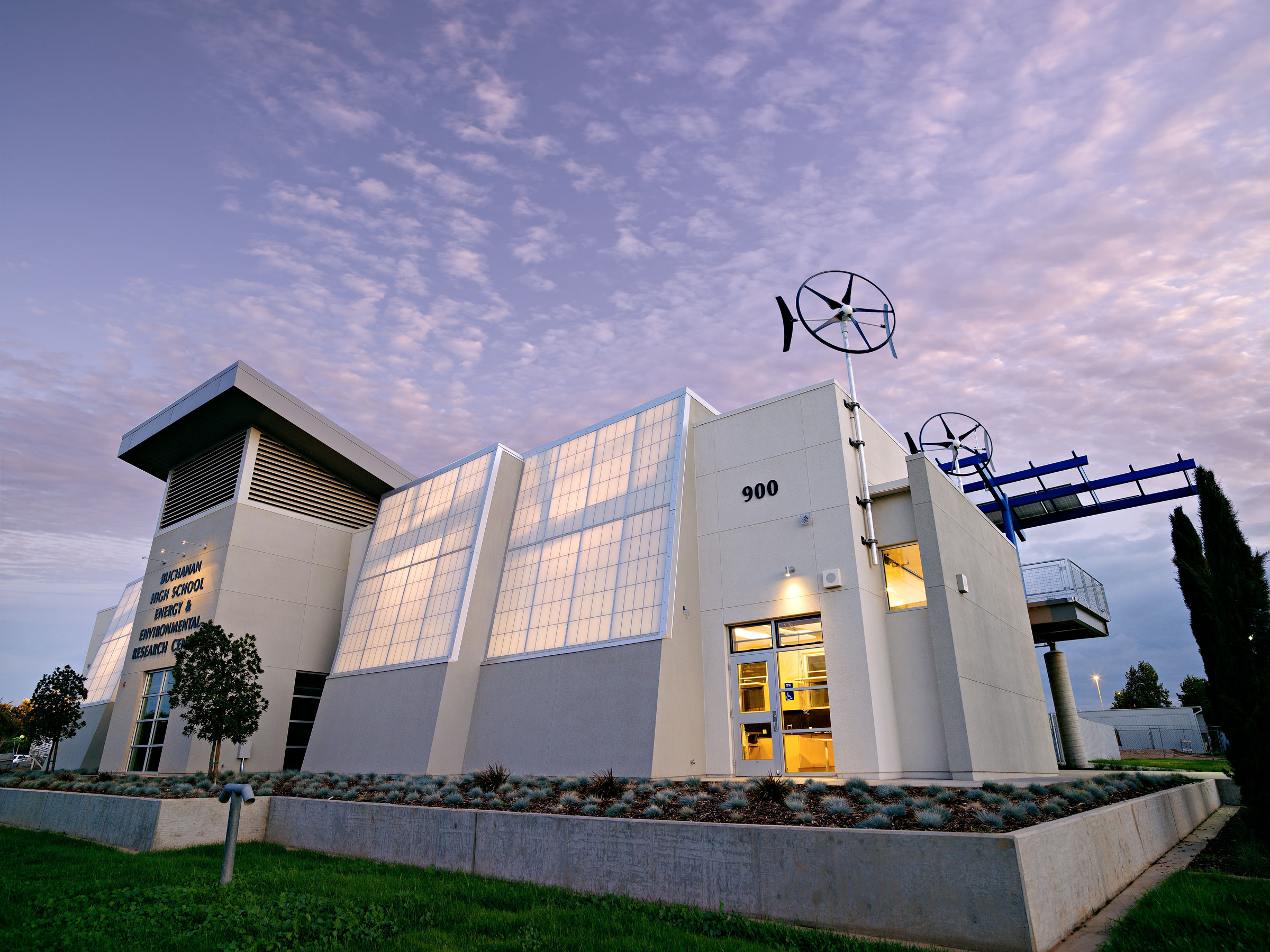
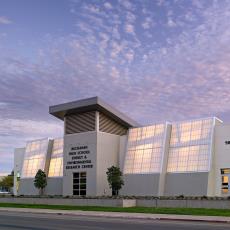
Buchanan Energy and Environmental Center in Clovis, Calif., is an award-winning academic building that has earned accolades by serving not just as a traditional teaching center, but as a teaching tool for instructors and students as well. And, thanks to the architect’s familiarity with Vitro Architectural Glass (formerly PPG glass), Solarban® 70 (formerly Solarban® 70XL) glass is playing an integral role in saving energy for the school and demonstrating how it does so, too.
Designed by John Smith of S.I.M. Architects in nearby Fresno, the $4.6 million Buchanan Center is a new vocational high school dedicated to educating students about the principles and practices of environmentally sustainable building.
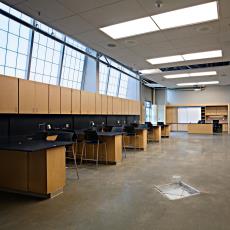
In addition to teaching conventional classroom curricula such as math, science and English, the school functions as a hands-on laboratory for demonstrating fundamental aspects of energy and water conservation, recycling, and alternative forms of energy production, such as wind and solar power generation.
Smith said he specified Solarban® 70 glass for Buchanan Center because of its unique combination of high visible light transmittance (VLT) and excellent solar control performance.
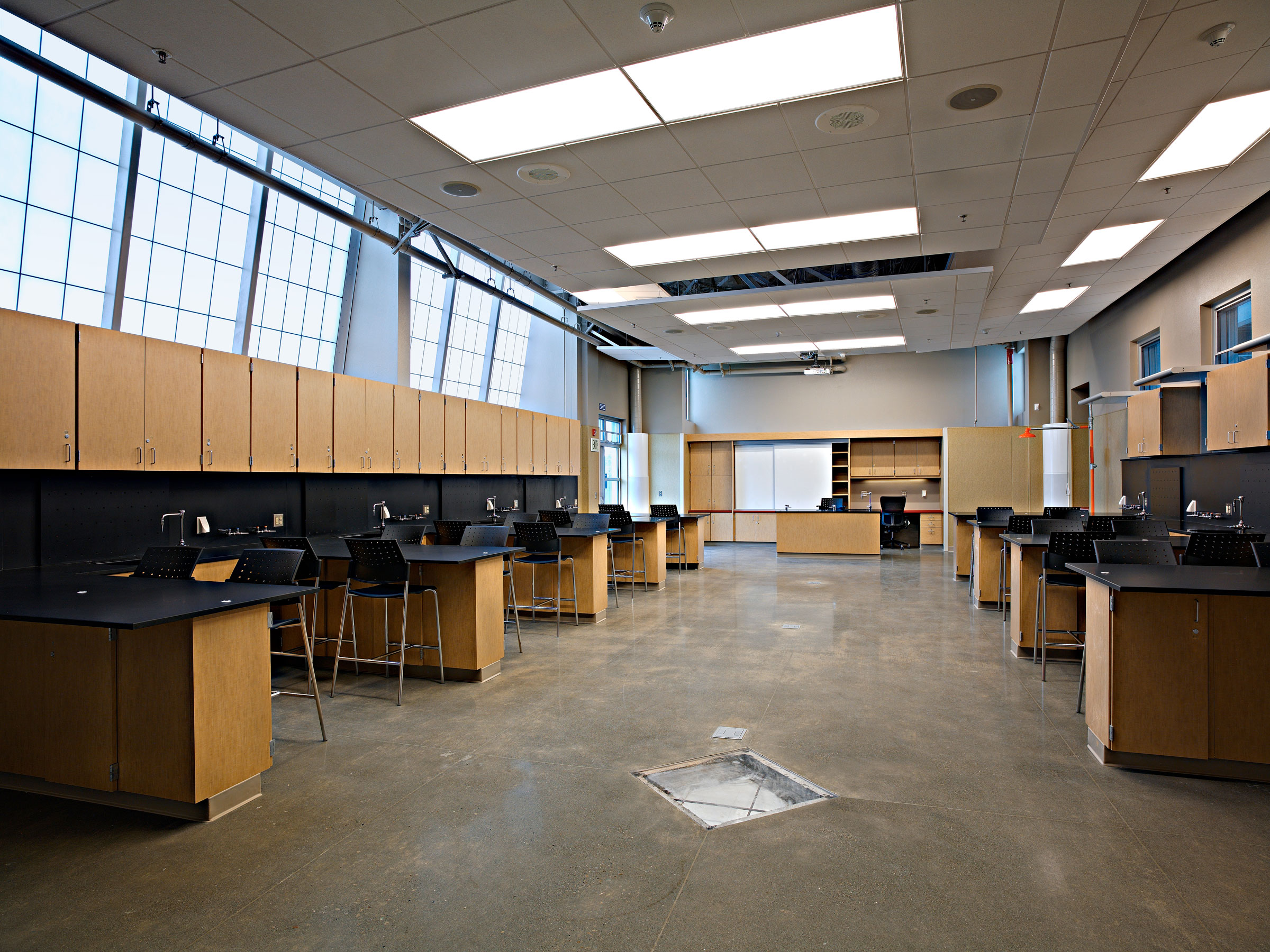
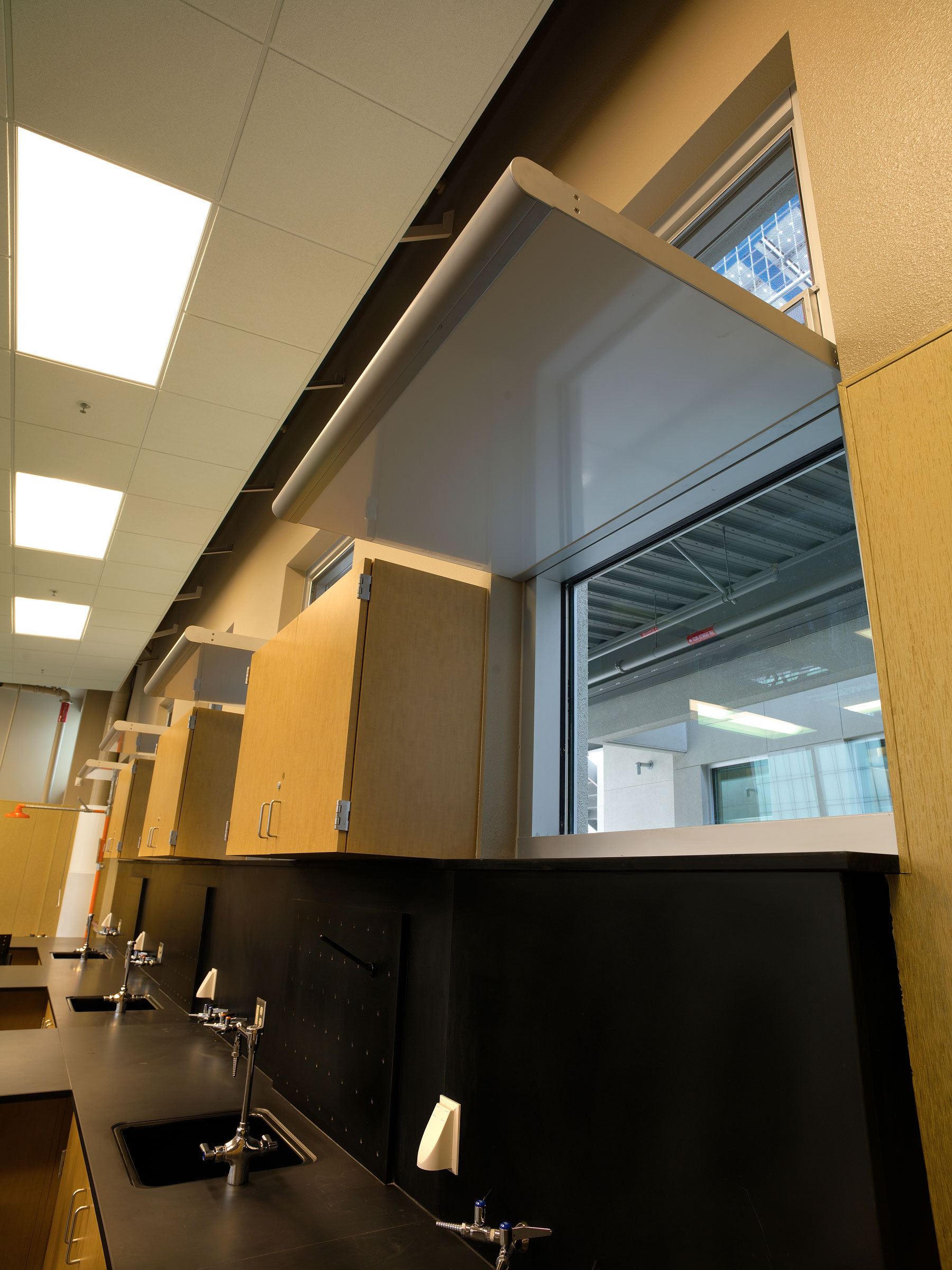
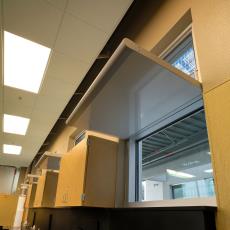
“We designed the building so that a majority of the windows were facing north and south,” Smith explained. “That enabled us to control solar heat while bringing in as much natural light as possible. We also used a storefront window system by Kawneer with light shelves to bounce light even further into the building.”
Solarban® 70 solar control, low-e glass is engineered with a proprietary triple-silver coating that delivers an optimal balance of transparency and solar control. With visible light transmittance (VLT) of 64 percent and a solar heat gain coefficient (SHGC) of 0.27 in a standard 1-inch insulating glass unit, Solarban® 70 glass has a light-to-solar gain (LSG) ratio of 2.37 that places it among the highest performing glasses in the industry.
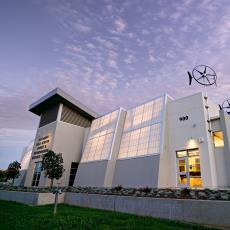
At the Buchanan Center, Solarban® 70 glass works in combination with skylights and several large translucent Kalwall® panels as part of a building-integrated lighting system. Operable windows fabricated with Solarban® 70 glass flood study areas and classrooms with light and provide natural ventilation. Sophisticated sensors turn lights on and off according to conditions.
The building also features super-energy efficient insulated concrete form (ICF) walls; a green, vegetative roof; Xeriscape plantings and irrigation systems; and high-efficiency heating and thermal displacement cooling systems. Solar panels and wind turbines provide a small percentage of the school’s power.
Virtually all of the center’s operating systems, including a radiant heat flooring system and the plumbing and ductwork, are left exposed and labeled so students can see how they work. Pupils also can monitor and measure the energy output of the solar and wind systems, and see how they are influenced by temperature, time of day, season and other environmental factors.
Smith said he had worked with Solarban® 70 glass before. “Our firm specs a lot of Vitro Glass [products],” he said. “They have a lot of great products and their website is very user-friendly, time-efficient and very visual.” The Buchanan Center earned a 2011 Excellence in Design Award from ED+C magazine in the educational category. It is expected to be LEED® Gold certified by the U.S. Green Building Council and it is CHPS-compliant.